

Enhancing Your Environmental Strategy with Innovative Automatic Filter Press Solutions
Time:
Mar 11,2025
Enhancing Your Environmental Strategy with Innovative Automatic Filter Press Solutions Table of Contents 1. Introduction to Automatic Filter Press Solutions 2. What is an Automatic Filter Press? 3. Benefits of Using Automatic Filter Press Solutions 3.1 Increased Efficiency in Wastewater Treatment 3.2 Cost Savings and Resource Optimization 3
Enhancing Your Environmental Strategy with Innovative Automatic Filter Press Solutions
Table of Contents
- 1. Introduction to Automatic Filter Press Solutions
- 2. What is an Automatic Filter Press?
- 3. Benefits of Using Automatic Filter Press Solutions
- 3.1 Increased Efficiency in Wastewater Treatment
- 3.2 Cost Savings and Resource Optimization
- 3.3 Enhanced Environmental Compliance
- 4. Applications of Automatic Filter Press Solutions
- 5. How Automatic Filter Press Works
- 6. Key Features and Technology Behind Automatic Filter Press
- 7. Future Trends in Filter Press Technology
- 8. Frequently Asked Questions (FAQs)
- 9. Conclusion
1. Introduction to Automatic Filter Press Solutions
In an era where environmental sustainability is paramount, industries are under increasing pressure to adopt effective waste management strategies. Automatic filter presses are emerging as a transformative solution in this context, offering innovative ways to enhance operational efficiency and reduce environmental impact. These machines are designed to automate the solid-liquid separation process, making them indispensable in diverse sectors such as wastewater treatment, mining, and food production.
This article delves into how automatic filter press solutions can bolster your environmental strategy and discusses their numerous advantages and applications.
2. What is an Automatic Filter Press?
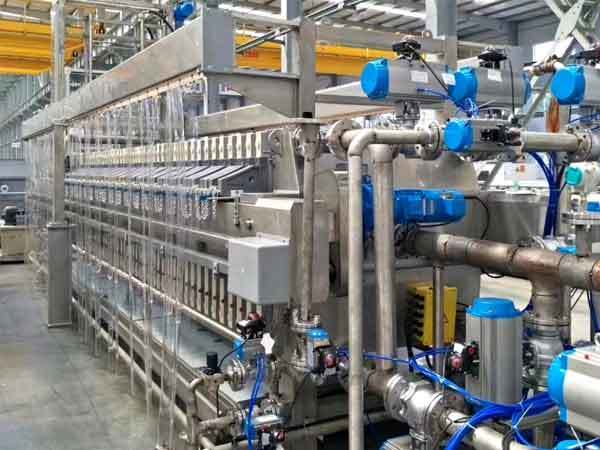
An automatic filter press is a mechanical device used to separate solids from liquids in various industrial processes. It operates by using pressure to force the liquid through a filter medium, which captures solid particles while allowing the clarified liquid to pass through. This technology automates the filtration process, reducing manual labor and enhancing efficiency.
Automatic filter presses consist of several components, including:
- **Filter Plates:** These are the primary components that hold the filter cloth and are arranged in a frame.
- **Filter Cloth:** This is the medium that traps solid particles during the filtration process.
- **Hydraulic System:** This system applies pressure to the filter plates, facilitating the solid-liquid separation.
- **Control System:** An automatic control panel manages the operation of the filter press, optimizing performance and ensuring safety.
3. Benefits of Using Automatic Filter Press Solutions
Investing in automatic filter press solutions offers a multitude of benefits, making them a prudent choice for businesses striving for environmental excellence.
3.1 Increased Efficiency in Wastewater Treatment
Automatic filter presses streamline the filtration process, significantly reducing processing time. The automation allows for continuous operation, enabling facilities to handle large volumes of wastewater without interruptions. This increased efficiency translates into faster turnaround times and improved productivity.
3.2 Cost Savings and Resource Optimization
By automating the filtration process, businesses can reduce labor costs and minimize the risk of human error. Additionally, automatic filter presses are designed to optimize the use of resources, such as water and energy, resulting in lower operational expenses. The recovery of valuable resources from wastewater can also contribute to overall cost savings.
3.3 Enhanced Environmental Compliance
Adopting automatic filter press solutions aids in meeting regulatory standards for waste disposal and environmental protection. By efficiently separating solids from liquids, these machines help industries comply with environmental regulations, reducing the risk of penalties and enhancing corporate reputation.
4. Applications of Automatic Filter Press Solutions
Automatic filter presses find applications across various industries, reflecting their versatility and effectiveness.
4.1 Municipal Wastewater Treatment
In municipal wastewater treatment facilities, automatic filter presses play a crucial role in clarifying wastewater. They help remove suspended solids and pollutants, ensuring that treated water meets environmental discharge standards. This application not only protects public health but also conserves water resources through effective recycling.
4.2 Industrial Applications
Industries such as mining, food processing, and chemical manufacturing utilize automatic filter presses for efficient solid-liquid separation. In the mining sector, they help recover valuable minerals from waste, while in food processing, they ensure the removal of impurities from products. The adaptability of filter presses to different material compositions enhances their appeal across sectors.
5. How Automatic Filter Press Works
The operation of an automatic filter press involves a series of well-coordinated steps:
1. **Filling:** The feed pump introduces the slurry (a mixture of solids and liquid) into the filter press.
2. **Filtration:** The hydraulic system compresses the filter plates together, creating chambers that trap solid particles against the filter cloth while allowing the liquid to flow through.
3. **Cake Formation:** As filtration continues, solid particles accumulate, forming a "cake" that increases in thickness.
4. **Washing (optional):** Some processes include a washing stage, where water is used to rinse the cake, further enhancing solid recovery.
5. **Cake Discharge:** Once the filtration cycle is complete, the filter plates open, and the solid cake is discharged, ready for disposal or further processing.
6. **Cycle Repeat:** The system resets for the next filtration cycle, maintaining continuous operation.
6. Key Features and Technology Behind Automatic Filter Press
Automatic filter presses are equipped with several cutting-edge features that enhance their performance:
- **Automated Control Systems:** These systems enable precise monitoring and control of the filtration process, improving efficiency and safety.
- **Energy-Efficient Design:** Many modern filter presses are designed with energy efficiency in mind, reducing operational costs and environmental impact.
- **Versatile Applications:** Capable of handling diverse feed materials, these machines can be customized to meet specific processing needs.
- **Robust Construction:** Built to withstand harsh industrial environments, automatic filter presses feature durable materials and components that ensure longevity.
7. Future Trends in Filter Press Technology
The landscape of filter press technology is evolving rapidly. Key trends include:
- **Integration with IoT:** The Internet of Things (IoT) is set to revolutionize filter press operations, allowing for real-time monitoring and predictive maintenance, ultimately increasing uptime and efficiency.
- **Sustainability Focus:** As industries strive for greener operations, filter press technology will increasingly emphasize resource recovery and waste minimization.
- **Advanced Materials:** Innovations in materials science may lead to enhanced filter cloths that offer better filtration efficiency and longer service life.
8. Frequently Asked Questions (FAQs)
What is the primary advantage of an automatic filter press over a manual one?
The primary advantage is automation, which increases efficiency, reduces labor costs, and minimizes errors in the filtration process.
How often do automatic filter presses need maintenance?
Routine maintenance is essential, typically every few months, depending on usage. Regular checks ensure optimal performance and longevity.
Can automatic filter presses handle all types of slurries?
While they are versatile, the suitability of an automatic filter press depends on the specific characteristics of the slurry, including particle size and viscosity.
What industries benefit most from automatic filter press solutions?
Industries such as wastewater treatment, mining, food processing, and chemical manufacturing benefit significantly from automatic filter presses.
Are automatic filter presses customizable for specific applications?
Yes, many manufacturers offer customization options to tailor filter presses to meet the unique needs of different processes and materials.
9. Conclusion
Implementing automatic filter press solutions is a strategic move for organizations looking to enhance their environmental strategies. With their ability to improve efficiency, reduce costs, and ensure compliance with regulations, these machines are invaluable assets in today’s environmentally conscious landscape. As technology continues to evolve, the benefits of automatic filter presses will only increase, positioning them as essential tools for sustainable industrial operations. By investing in innovative filtration technology, businesses can not only achieve operational excellence but also contribute positively to environmental stewardship.
RELATED NEWS



Copyright ©
