

Innovative Filter Press Solutions for Effective Semiconductor Wastewater Management
Time:
Sep 19,2025
Innovative Filter Press Solutions for Effective Semiconductor Wastewater Management Table of Contents Understanding Semiconductor Wastewater Challenges The Role of Filter Press in Wastewater Treatment Innovative Filter Press Technologies Advantages of Using Filter Press in Semiconductor Industries Case Studies: Successful Implementations of Filter Press Solutions Future Tr
Innovative Filter Press Solutions for Effective Semiconductor Wastewater Management
Table of Contents
- Understanding Semiconductor Wastewater Challenges
- The Role of Filter Press in Wastewater Treatment
- Innovative Filter Press Technologies
- Advantages of Using Filter Press in Semiconductor Industries
- Case Studies: Successful Implementations of Filter Press Solutions
- Future Trends in Semiconductor Wastewater Management
- Frequently Asked Questions (FAQs)
- Conclusion
Understanding Semiconductor Wastewater Challenges
The semiconductor manufacturing process generates significant amounts of wastewater, which can be laden with harmful substances such as heavy metals, acids, and organic solvents. These contaminants pose serious environmental risks and present challenges for manufacturers, particularly in terms of compliance with environmental regulations.
The complexity of semiconductor wastewater arises due to various factors:
- **Variety of Chemicals:** The range of chemicals used in semiconductor production varies widely, complicating treatment processes.
- **Volume and Concentration:** High volumes of wastewater generated require robust management solutions, as do the varying concentrations of pollutants.
- **Environmental Regulations:** Stringent local and international standards necessitate effective treatment solutions that minimize ecological impact.
Understanding these challenges is the first step toward implementing effective wastewater management strategies, particularly through innovative technologies like filter presses.
The Role of Filter Press in Wastewater Treatment
Filter presses are vital in the wastewater treatment landscape, particularly in industries like semiconductors where precision and compliance are critical. These mechanical devices separate solids from liquids using pressure, allowing for efficient sludge management and high-quality effluent.
Key functions of filter presses in semiconductor wastewater management include:
- **Solid-Liquid Separation:** They efficiently separate contaminants from wastewater, producing solid waste that can be disposed of safely and clean water that can be treated further or reused.
- **Space Efficiency:** Filter presses are designed to occupy minimal space while maximizing throughput, making them ideal for semiconductor facilities with limited real estate.
- **Customization:** Filter presses can be tailored to meet the specific needs of semiconductor manufacturers, addressing unique wastewater characteristics and regulatory requirements.
Incorporating filter presses into wastewater management systems can significantly enhance operational efficiency and compliance with environmental standards.
Innovative Filter Press Technologies
Recent advancements in filter press technologies have revolutionized how semiconductor manufacturers manage their wastewater. Key innovations include:
Automated Filter Press Systems
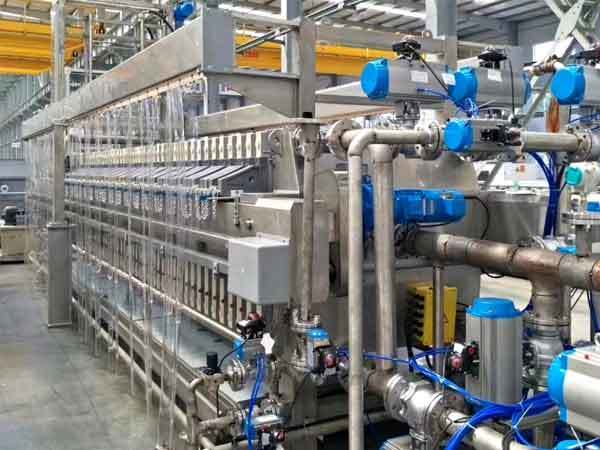
Automation in filter press operations improves efficiency and reduces labor costs. Automated systems can monitor pressure, cycle times, and maintenance needs, ensuring optimal performance and minimal downtime.
High-Performance Membrane Filter Presses
Membrane filter presses are equipped with membranes that enable higher filtration rates and better solid recovery. They are particularly beneficial in semiconductor applications due to their ability to handle varied wastewater compositions and produce cleaner effluent.
Energy-Efficient Designs
Modern filter presses are designed to minimize energy consumption while maximizing performance. Innovations such as variable frequency drives (VFDs) allow for more efficient operation, reducing overall energy costs for semiconductor manufacturers.
Remote Monitoring and Control
The integration of IoT (Internet of Things) technology allows for real-time monitoring and control of filter press operations. This capability enhances operational oversight and facilitates proactive maintenance, preventing costly disruptions.
These innovations not only improve the efficiency of wastewater treatment processes but also contribute to the sustainability goals of semiconductor manufacturers.
Advantages of Using Filter Press in Semiconductor Industries
Utilizing filter press technology in semiconductor wastewater management offers multiple advantages:
Cost-Effectiveness
By efficiently separating solids from liquids, filter presses reduce the volume of wastewater that needs further treatment or disposal. This can lead to significant savings in operational costs, including waste disposal fees and treatment expenses.
Improved Compliance
Filter presses help semiconductor manufacturers meet stringent regulatory requirements by producing high-quality effluent that meets or exceeds environmental standards. This not only mitigates legal risks but also enhances corporate sustainability profiles.
Reduced Environmental Impact
By effectively managing wastewater, filter presses contribute to lower pollution levels and reduced environmental degradation. This aligns with the growing demand for sustainable practices in the semiconductor industry.
Enhanced Operational Efficiency
Automated and high-performance filter presses streamline wastewater treatment processes, enabling semiconductor manufacturers to focus on core production activities while ensuring efficient waste management.
The advantages of filter press technologies make them an essential component of modern semiconductor wastewater management strategies.
Case Studies: Successful Implementations of Filter Press Solutions
Examining successful implementations of filter press technology can provide valuable insights for semiconductor manufacturers considering upgrades to their wastewater management systems.
Case Study 1: Major Semiconductor Manufacturer
A leading semiconductor manufacturer implemented a high-performance membrane filter press system to manage its wastewater. The result was a **30% reduction in sludge volume** and a **significant improvement in effluent quality**, leading to better compliance with environmental standards and lower disposal costs.
Case Study 2: Sustainable Semiconductor Facility
A new semiconductor fabrication facility prioritized sustainability by integrating automated filter press systems into its wastewater management strategy. This decision not only enhanced operational efficiency but also allowed the facility to achieve a **zero-waste goal**, significantly reducing its environmental footprint.
These case studies illustrate the potential of innovative filter press solutions to drive efficiency, compliance, and sustainability in semiconductor wastewater management.
Future Trends in Semiconductor Wastewater Management
As the semiconductor industry evolves, so too will the technologies and strategies employed for wastewater management. Key future trends include:
Increased Automation
The trend towards automation will continue, with more facilities adopting smart technologies for operational efficiency and maintenance.
Focus on Water Reuse
With water scarcity becoming a pressing issue globally, semiconductor manufacturers will increasingly focus on technologies that enable water reuse, making filter presses a critical component of sustainable practices.
Integration of Advanced Analytics
The application of data analytics to wastewater management will enhance decision-making and operational efficiency, as manufacturers leverage real-time data to optimize filter press performance.
These trends indicate a shift towards more sustainable and efficient practices in semiconductor wastewater management, further solidifying the role of innovative filter press solutions.
Frequently Asked Questions (FAQs)
What is a filter press, and how does it work?
A filter press is a mechanical device that separates solids from liquids by applying pressure to a slurry, resulting in a solid cake and a clarified liquid. This process is essential in various industries, including semiconductor manufacturing, for effective wastewater management.
Why are filter presses preferred in semiconductor wastewater management?
Filter presses are preferred because they efficiently separate contaminants from wastewater, produce high-quality effluent, and help manufacturers comply with environmental regulations while minimizing operational costs.
What are the benefits of automated filter presses?
Automated filter presses enhance operational efficiency by reducing labor costs, minimizing human error, and providing real-time monitoring and control over the filtration process.
How can semiconductor manufacturers ensure compliance with wastewater regulations?
By implementing advanced wastewater treatment technologies, such as filter presses, and staying updated on regulatory changes, semiconductor manufacturers can effectively manage their wastewater and ensure compliance.
What future technologies can further enhance wastewater management in the semiconductor industry?
Future technologies may include enhanced automation, IoT integration for real-time monitoring, advanced analytics for decision-making, and innovative treatments that focus on water reuse and sustainability.
Conclusion
Innovative filter press solutions play a pivotal role in the effective management of wastewater within the semiconductor industry. By addressing the myriad challenges associated with semiconductor wastewater, these technologies not only enhance compliance and operational efficiency but also contribute to a more sustainable future. As advancements continue to emerge, filter presses will remain integral to evolving wastewater management strategies, empowering semiconductor manufacturers to meet both environmental and operational goals. Embracing these innovations is essential for staying competitive and responsible in today's rapidly changing industrial landscape.
RELATED NEWS



Copyright ©
