

The Essential Role of Municipal Sludge Dewatering Filter Press in Waste Management
Time:
May 22,2026
Municipal sludge is a byproduct of wastewater treatment processes, containing water, organic matter, and various pollutants. The proper management of this sludge is essential not only for public health but also for environmental protection. Municipal Sludge Dewatering Filter Press plays a vital role in this domain by efficiently reducing the volume of sludge, thereby minimizing disposal costs and
Municipal sludge is a byproduct of wastewater treatment processes, containing water, organic matter, and various pollutants. The proper management of this sludge is essential not only for public health but also for environmental protection. Municipal Sludge Dewatering Filter Press plays a vital role in this domain by efficiently reducing the volume of sludge, thereby minimizing disposal costs and environmental impact.
The Municipal Sludge Dewatering Filter Press operates on the principle of mechanically squeezing water out of the sludge. The process involves feeding the sludge into the press, where it is subjected to high pressure between two filter plates. As this pressure is applied, water is expelled, leaving behind a drier, more manageable cake of sludge. This dewatered sludge is easier to handle, transport, and dispose of, and in some cases, it can even be repurposed as a soil amendment or energy source.
One of the primary advantages of using a Municipal Sludge Dewatering Filter Press is its efficiency. Compared to traditional sludge disposal methods, such as landfilling or incineration, the filter press significantly reduces the volume of sludge, leading to lower transportation and treatment costs. Furthermore, it improves the overall sustainability of waste management practices by enabling the recovery of valuable resources from the waste stream.
Another important benefit is the environmental impact reduction. With stricter regulations surrounding waste disposal and increasing public awareness of environmental sustainability, municipalities are under pressure to adopt cleaner waste management solutions. The Municipal Sludge Dewatering Filter Press not only helps in complying with these regulations but also assists in minimizing the ecological footprint of municipal waste treatment facilities.
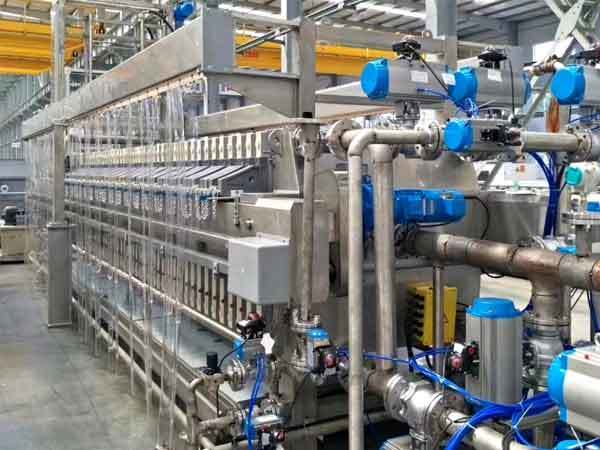
In addition, the technology behind Municipal Sludge Dewatering Filter Press has evolved over the years. Modern filter presses are equipped with advanced automation and control systems that enhance operational efficiency and reduce labor costs. Features such as automatic plate shifting and pressure monitoring ensure optimal performance and reduce the risk of operational downtime.
In conclusion, the Municipal Sludge Dewatering Filter Press is a crucial component in the effective management of municipal sludge. By offering efficient dewatering solutions, it aids in minimizing waste volume, reducing environmental impacts, and supporting sustainable waste management practices. As municipalities continue to seek innovative solutions to meet their waste management challenges, the relevance of this technology will undoubtedly increase. Understanding its operation and benefits is essential for professionals in the engineering and construction machinery sector, particularly those involved in municipal and environmental sanitation machinery.
The Municipal Sludge Dewatering Filter Press operates on the principle of mechanically squeezing water out of the sludge. The process involves feeding the sludge into the press, where it is subjected to high pressure between two filter plates. As this pressure is applied, water is expelled, leaving behind a drier, more manageable cake of sludge. This dewatered sludge is easier to handle, transport, and dispose of, and in some cases, it can even be repurposed as a soil amendment or energy source.
One of the primary advantages of using a Municipal Sludge Dewatering Filter Press is its efficiency. Compared to traditional sludge disposal methods, such as landfilling or incineration, the filter press significantly reduces the volume of sludge, leading to lower transportation and treatment costs. Furthermore, it improves the overall sustainability of waste management practices by enabling the recovery of valuable resources from the waste stream.
Another important benefit is the environmental impact reduction. With stricter regulations surrounding waste disposal and increasing public awareness of environmental sustainability, municipalities are under pressure to adopt cleaner waste management solutions. The Municipal Sludge Dewatering Filter Press not only helps in complying with these regulations but also assists in minimizing the ecological footprint of municipal waste treatment facilities.
In addition, the technology behind Municipal Sludge Dewatering Filter Press has evolved over the years. Modern filter presses are equipped with advanced automation and control systems that enhance operational efficiency and reduce labor costs. Features such as automatic plate shifting and pressure monitoring ensure optimal performance and reduce the risk of operational downtime.
In conclusion, the Municipal Sludge Dewatering Filter Press is a crucial component in the effective management of municipal sludge. By offering efficient dewatering solutions, it aids in minimizing waste volume, reducing environmental impacts, and supporting sustainable waste management practices. As municipalities continue to seek innovative solutions to meet their waste management challenges, the relevance of this technology will undoubtedly increase. Understanding its operation and benefits is essential for professionals in the engineering and construction machinery sector, particularly those involved in municipal and environmental sanitation machinery.
RELATED NEWS



Copyright ©
